It’s been years since I posted anything here that wasn’t a book review or something about life as a student half a century ago, so I thought I might try another tack. These days, I’m in rural Italy almost as much as urban Manchester, so I will offer you, dear reader, some insights into life in il bel paese.
Public transport in rural Italy is a bit hit-and-miss. In the faded old spa town where I currently am, I can get a bus to the two nearest towns, one of which has a railway station, and whence I can travel pretty much anywhere. But the buses are infrequent and slow. What’s more, if I want to travel to one of the surrounding hill villages, I am limited to one bus a day. But we manage, just.
Tickets for local buses can be bought at the tabacchi and validated on board. At least, that was the system. A few years ago, we went to get tickets, and were told at the tabacchi they had none. Neither did any of the other outlets. When we asked why, we were told it was because of the “cambio” – the change. What was the change? We couldn’t work it out. When we boarded the bus, ticketless, we asked the driver if we could buy them from him, since we couldn’t get them elsewhere. No, that was not possible, as the driver had stopped issuing tickets because of the covid regulations, and that function had not been restored. What should we do, then, we asked. “Dai, salite!” he said. Just get on.
We learned that the change was a transfer from the company who ran the buses to a new company, Autolinee Toscana, which, despite the name, is a French concern. Soon, new tickets arrived. These tickets did not fit the machines on board – you had to fold them to make them fit – but at least things seemed to be improving. The new company added new buses, and other means of getting tickets. One method involved opening a digital account, and buying tickets online. This required giving them full details, including your address, credit card details, codice fiscale, BMI – maybe not the last one. Whatever, it was immensely fiddly. Finally, last year, the company installed the card readers that users of transport systems in England will be familiar with, so we were able to ride ticketless, by tapping in and tapping out. The card readers worked most of the time.
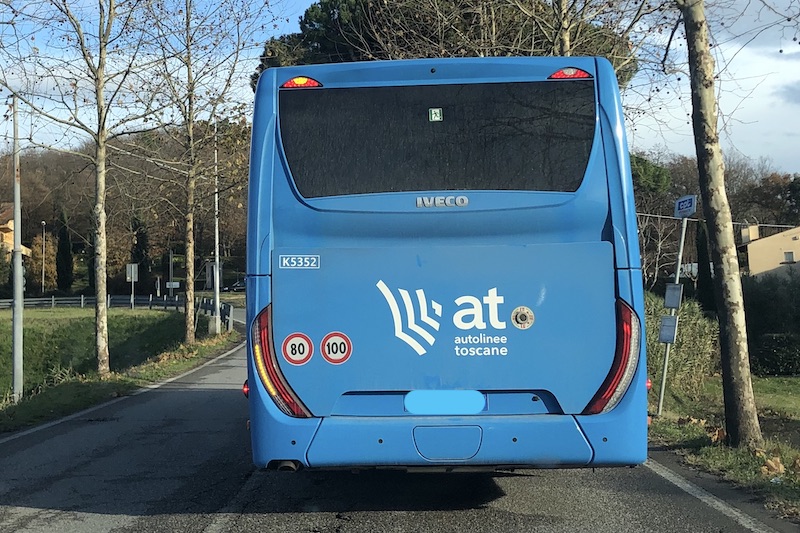
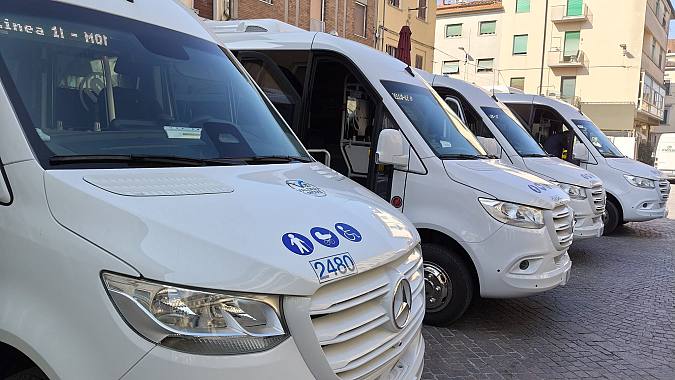
This week, we wanted to plan a journey, and checked the Autolinee Toscana timetable online to see if there were any changes. And there were. AT seemed to have cut almost half of their services, with four hour gaps during the day, and a last bus before seven in the evening. The new timetable had come into effect ten days before. This was hopeless. We spent some time trying to find out what had caused this: nothing on the comune’s website, nothing on the local social media channels. We looked at the timetable at the bus stop. It confirmed what the website said. Eventually we came across a local news report: the local bus contract had been taken over by a group of local transport companies. But not all the buses, of course: that would be too simple. A look at their timetable confirmed that the new conglomeration would now supply buses that essentially filled the holes left by AT’s withdrawal. There’s nothing locally to advertise this change: at the bus stop, there is no timetable for the new company, just the new reduced AT one. And the buses they are using aren’t the large coaches that AT have; they are essentially mini-buses, accommodating perhaps twenty passengers. They are very smart, but there’s nowhere to stow luggage, and of course no card reader. So it’s back to the tabacchi for tickets that will probably not fit the machine.
 Transports of delight? by Dr Rob Spence is licensed under a Creative Commons Attribution-ShareAlike 4.0 International License.


Leave a Reply